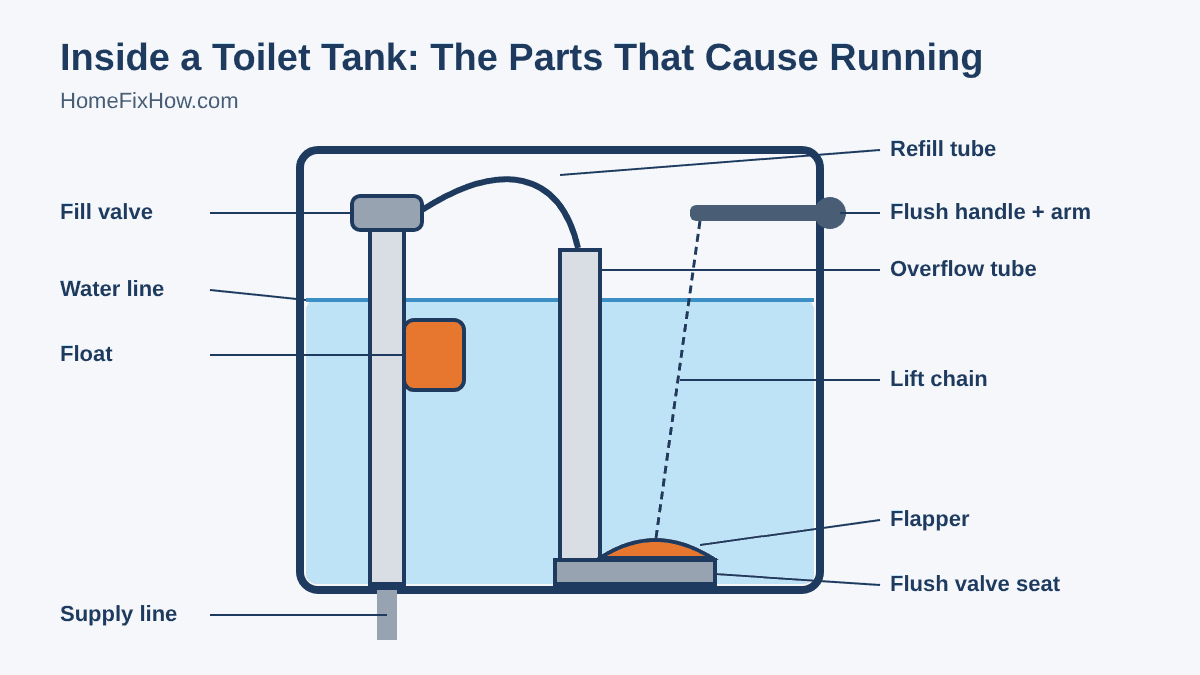
How to Fix a Running Toilet (5 Easy Fixes)
To fix a running toilet, lift the tank lid and check three things in this order: the chain, the water level, and the flapper. A worn flapper is the most common cause, and the U.S. EPA recommends replacing it at least every five years. A chain or water-level adjustment takes a few minutes and costs nothing. A new flapper usually takes about 15 minutes, and even a full fill valve and flapper kit is typically under $35.
This guide is for homeowners and renters with a standard gravity-flush toilet. No plumbing experience needed.
Key takeaways
- Water spilling into the overflow tube means the water level is too high or the fill valve is worn.
- Water slowly draining from the tank means it is leaking into the bowl. Check the flapper and its seal first, since that is the most common cause.
- Set the water ½ to 1 inch below the top of the overflow tube.
- Leave a little slack in the flapper chain so the flapper drops flat.
- A food-coloring dye test confirms a silent leak in 10 minutes.
Why is my toilet running?
A toilet runs when water keeps flowing from the tank into the bowl, or when the tank keeps refilling. The usual causes are a worn or warped flapper, a flapper chain that is too tight or tangled, a water level set too high, or a fill valve that won’t shut off.
The EPA lists worn toilet flappers among the most common household leaks. Rubber flappers wear out over time, and an old flapper can make a toilet flush on its own or silently leak thousands of gallons a year.
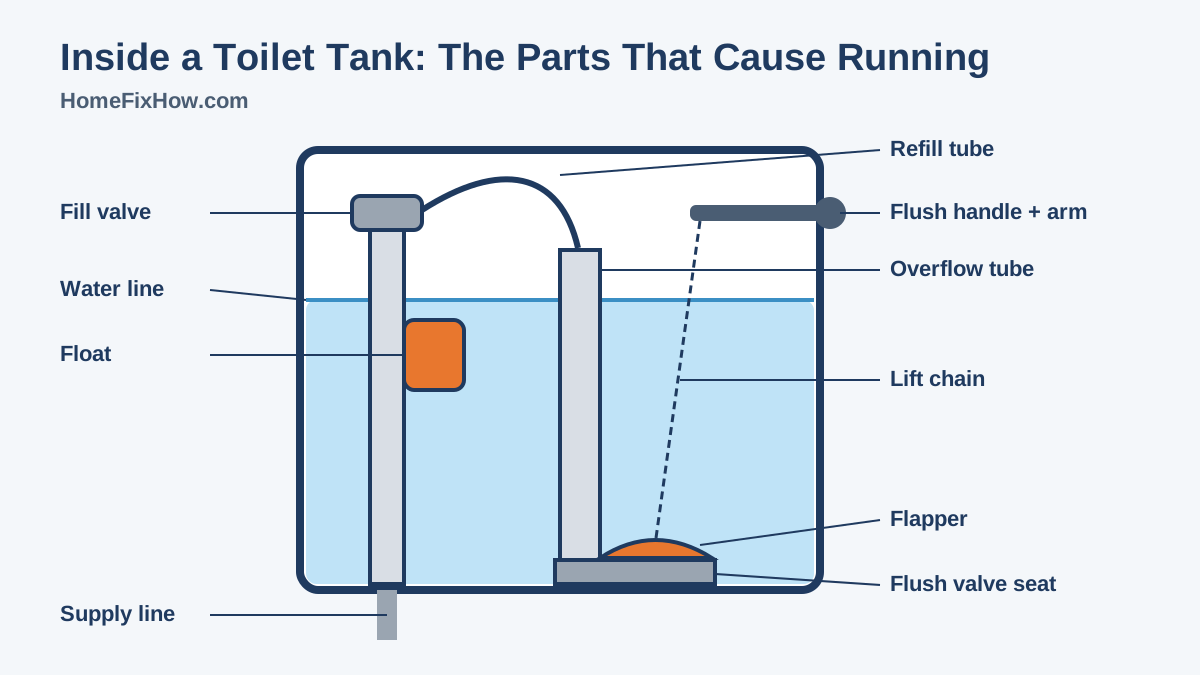
Find the cause in 2 minutes
Take the tank lid off and set it on a towel. Flush once and watch what the water does. Use this table to match what you see to the fix.
| What you see | Likely cause | Fix |
|---|---|---|
| Water spills into the overflow tube | Water level too high, or worn fill valve | Fix 2 or Fix 5 |
| Water level slowly drops, tank refills on its own | Leaking flapper (most common) | Fix 3 |
| Flapper doesn’t close after a flush | Chain too tight, tangled or caught | Fix 1 |
| Faint hissing, no visible spill | Refill tube pushed too deep in overflow tube | Fix 4 |
| Still runs with a new flapper | Rough or damaged flush valve seat | See “Still running after a new flapper?” |
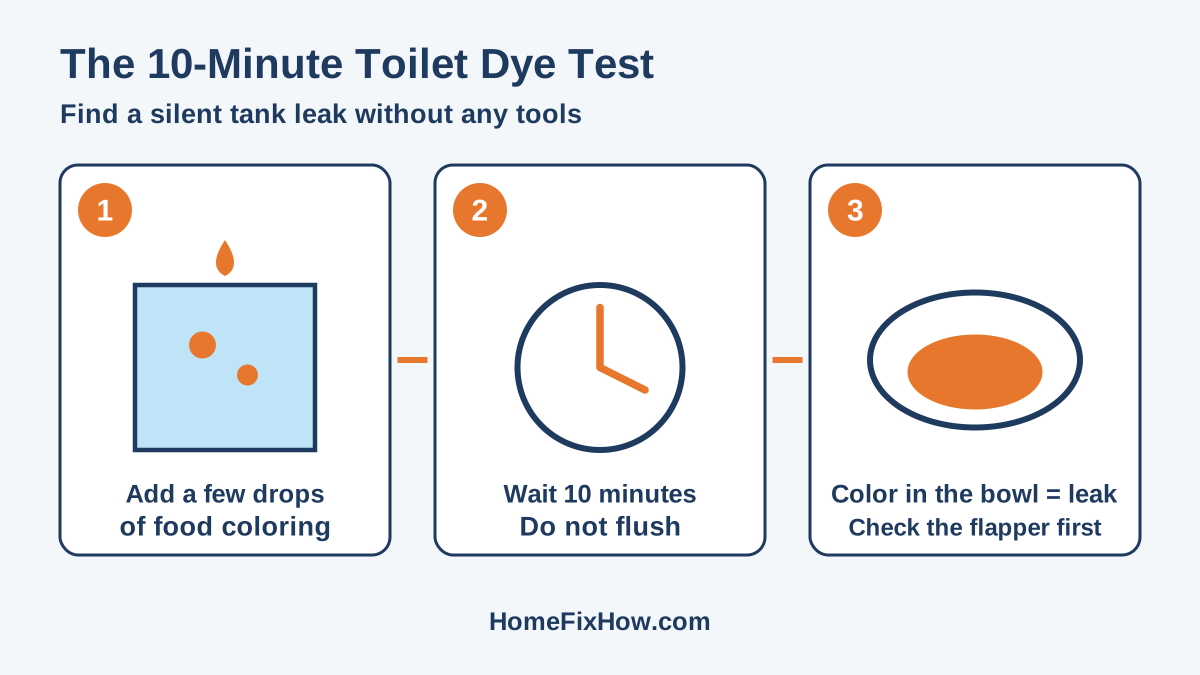
Two quick tests for silent leaks
- Dye test: Put a few drops of food coloring in the tank. Don’t flush. If color shows up in the bowl after 10 minutes, water is leaking from the tank into the bowl. Check the flapper and its seal first, since a worn flapper is the usual cause (EPA). Flush afterward so the dye doesn’t stain.
- Water-line test: Mark the water level inside the tank with a pencil. Turn off the water supply and wait 10–15 minutes (Fluidmaster). If the level drops below the mark, the flapper or flush valve is leaking.
Tools and parts you’ll need
| Item | Used for | Notes |
|---|---|---|
| Towel and sponge | Soaking up water | Keep under the tank while you work |
| Replacement flapper | Fix 3 | 2-inch or 3-inch to match your toilet |
| Fill valve (optional) | Fix 5 | Universal valves fit most toilets |
| Fill valve + flapper kit | Fix 3 and Fix 5 together | About $10–$35 in the US (2026) |
| Adjustable pliers | Supply nut, chain clip | Hand-tighten plastic nuts first |
| Bucket | Catching water from the supply line | Only needed for a fill valve swap |
Prices vary by store and brand, so check a couple of local hardware stores before you buy.
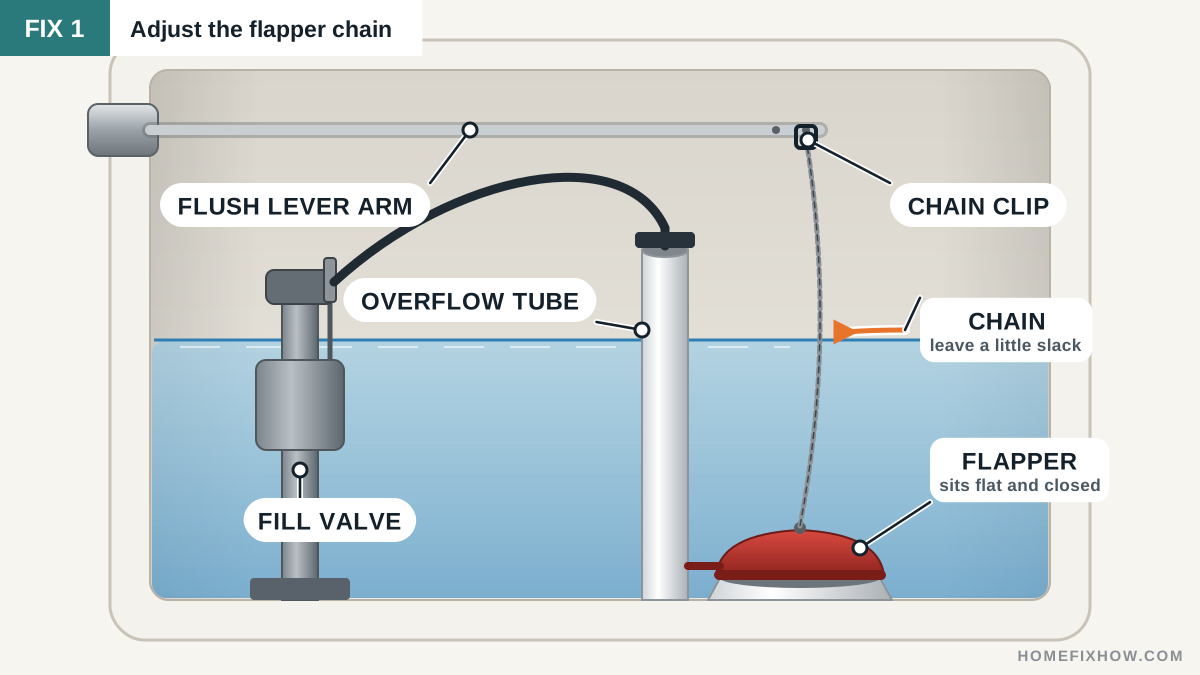
Fix 1: Adjust the flapper chain
A chain that is too tight holds the flapper open. A chain that is too loose can get caught under the flapper. Either way, water leaks into the bowl.
- Unhook the chain clip from the flush lever arm.
- Move the clip to a link that leaves a little slack when the flapper is closed.
- Trim extra chain so it can’t fall under the flapper.
- Flush twice and check that the flapper drops flat every time.
Fix 2: Lower the water level
If water trickles into the overflow tube, the float is set too high. The tank should stop filling ½ to 1 inch below the top of the overflow tube, or at the fill line marked inside many tanks.
- Find the adjustment on your fill valve: a screw on top, or a clip on the float rod.
- Turn the screw or slide the float down a small amount.
- Flush and let the tank refill.
- Repeat until the water stops ½ to 1 inch below the overflow tube.
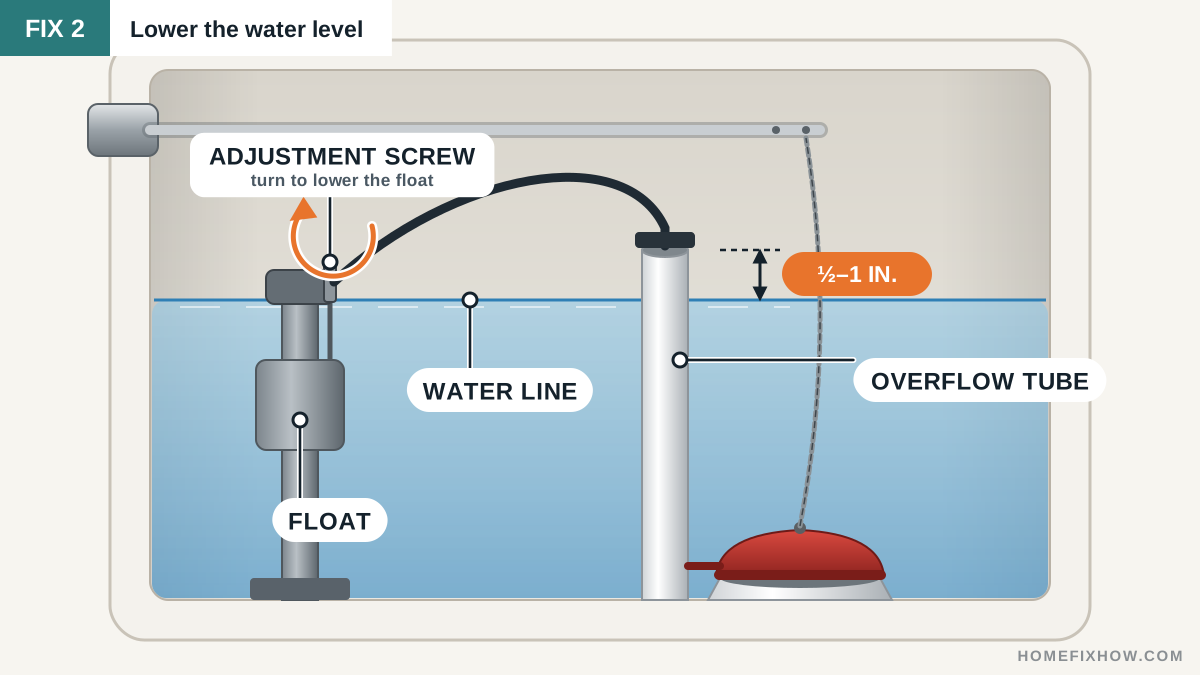
Older toilets with a ball float on a metal arm can be adjusted by gently bending the arm down.
Fix 3: Clean or replace the flapper
Replacing the toilet flapper fixes most running toilets. A flapper is the rubber seal at the bottom of the tank. Over time, minerals and chlorine make it stiff or warped, so water slips past it. The EPA recommends checking it often and replacing it at least every five years.
- Turn off the water at the valve behind the toilet (turn it clockwise).
- Flush and hold the handle down to drain the tank.
- Unhook the chain and pull the flapper off its two side pegs.
- Wipe the flush valve seat with a cloth or nylon pad to remove grit.
- Fit the new flapper on the pegs and reattach the chain with a little slack.
- Turn the water on, let the tank fill, and do the dye test again.
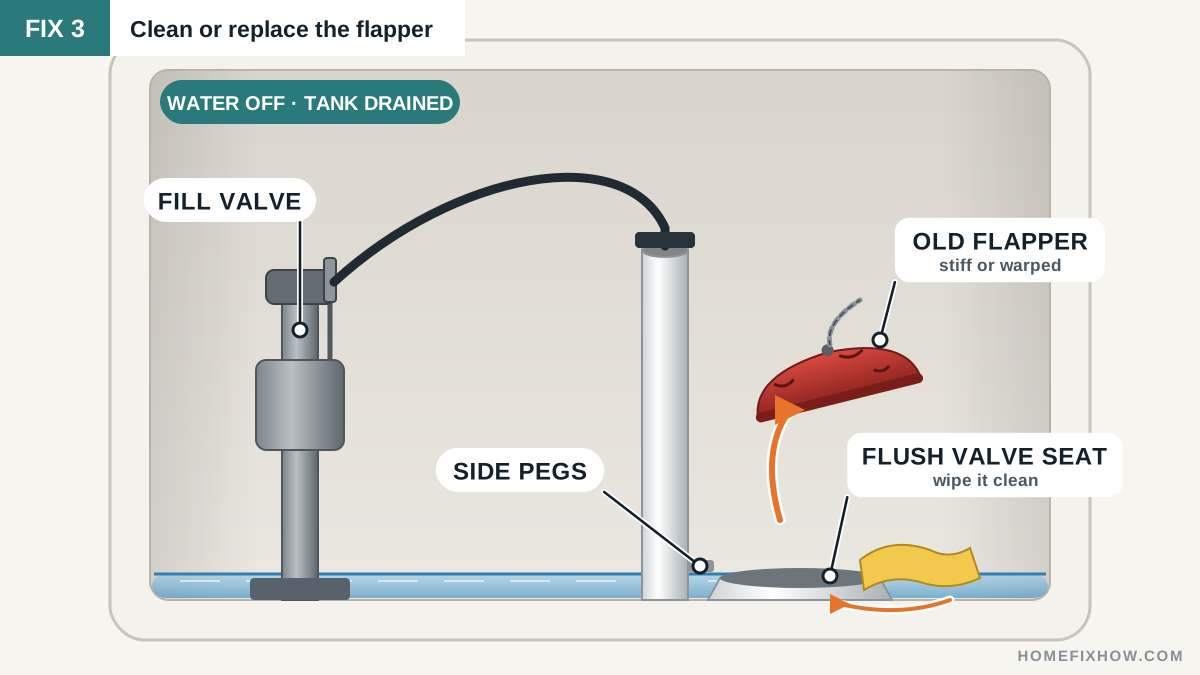
Take the old flapper (or a photo) to the store. The EPA advises checking its width and whether it has a foam float. Fluidmaster notes most toilets use a 2-inch or 3-inch flapper.
Fix 4: Reset the refill tube
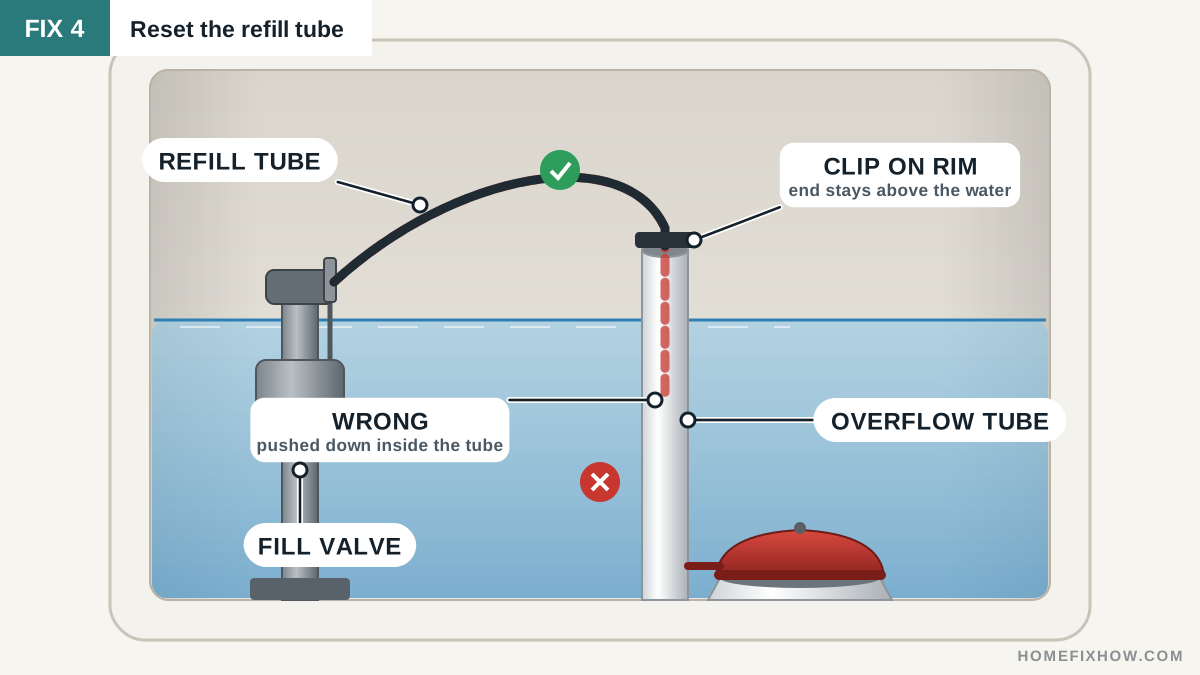
The thin refill tube runs from the fill valve to the overflow tube. If its end sits below the water line inside the overflow tube, it can siphon water out of the tank. That makes the fill valve kick on again and again.
- Pull the refill tube out of the overflow tube.
- Clip it to the rim of the overflow tube so the end points down but stays above the water.
- If the clip is missing or broken, buy a replacement refill tube clip. Don’t just push the tube down into the overflow tube to hold it in place.
- Flush and listen. The hissing should stop once the tank is full.
Fix 5: Clean or replace the fill valve
A fill valve that won’t shut off often has grit inside. Fluidmaster suggests flushing the valve before replacing it.
- Turn off the water and flush to empty the tank.
- Remove the fill valve cap (on most Fluidmaster valves, press down and twist it ⅛ turn counterclockwise).
- Hold a cup upside down over the open valve and turn the water on for 10–15 seconds to blast out debris.
- Replace the cap, turn the water on and flush to test.
- If it still runs, replace the fill valve. Shut off the water, disconnect the supply line, unscrew the locknut under the tank, and install the new valve to the height its instructions show.
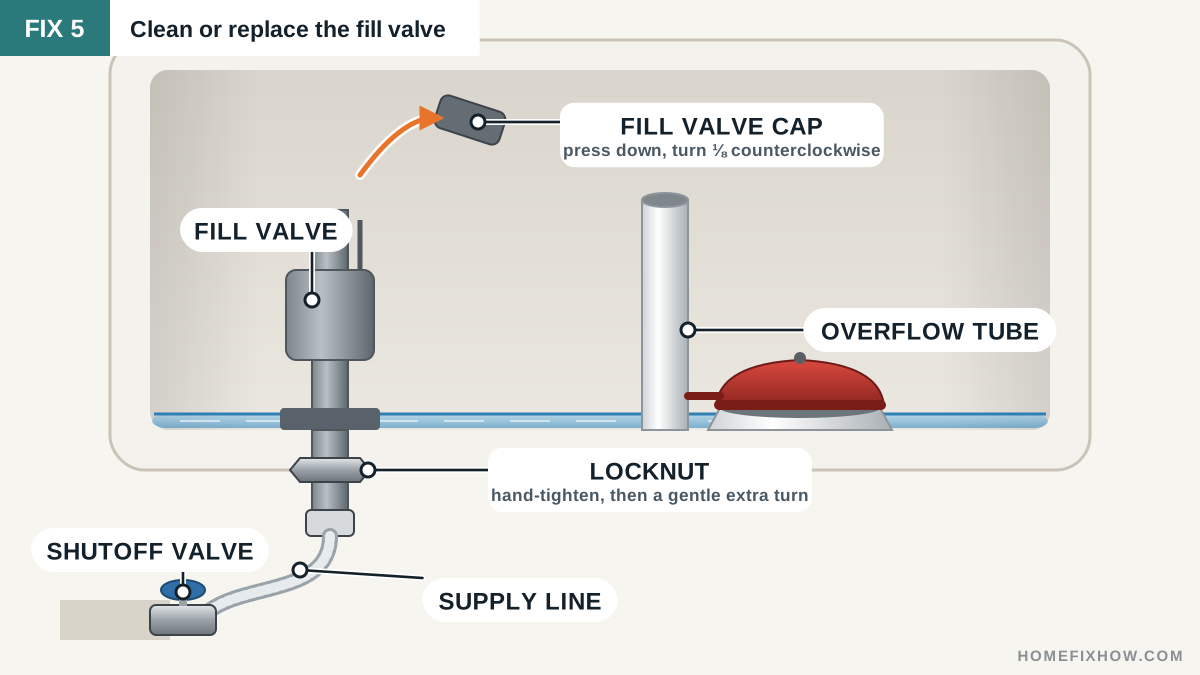
Hand-tighten plastic nuts, then give a gentle extra turn. Over-tightening can crack the valve or tank.
Still running after a new flapper?
If a new flapper doesn’t stop the leak, the flush valve seat is likely rough, chipped or covered in mineral buildup. A flapper can’t seal on a damaged seat.
- Clean the seat gently with a nylon scrub pad or fine emery cloth.
- Check that the new flapper is the right size (2-inch vs 3-inch).
- If the water-line test still shows a drop, Fluidmaster recommends replacing the flush valve. This means removing the tank, so many homeowners call a plumber for this step.
Why does my toilet run by itself? (Ghost flushing)
“Ghost flushing” is when a toilet refills for a few seconds with no one using it. It happens because a slow flapper leak lowers the tank water until the fill valve tops it up. Fix it with the dye test and a new flapper (Fix 3).
How much water does a running toilet waste?
A running toilet can waste a lot of water quickly. An older EPA WaterSense fact sheet warns a running toilet could waste 200 gallons or more every day. According to the EPA (2026), the average household’s leaks waste more than 9,300 gallons a year, and 9% of homes have leaks wasting 50 gallons or more per day.
Fixing easy leaks like a worn flapper can cut water bills by about 10% (EPA). Toilets are also the largest indoor water user, at nearly 30% of indoor use (EPA WaterSense).
Mistakes to avoid
- Using bleach or chlorine drop-in tablets. Fluidmaster warns they damage tank parts and can cause leaks.
- Buying the wrong flapper size. Bring the old one to the store.
- Leaving the chain too long. Extra chain can jam under the flapper.
- Over-tightening plastic nuts. They crack easily.
- Skipping the retest. Repeat the dye test after every fix.
When to call a plumber
Call a licensed plumber if the shutoff valve won’t turn or leaks, water is leaking onto the floor, the tank or bowl is cracked, or the toilet still runs after you replace the flapper and fill valve. Flush valve replacement also means removing the tank, which is harder for beginners.
FAQ
Why is my toilet running for 2 minutes after I flush it?
Some refill time is normal while the tank fills. If it runs much longer, the water level may be set too high and spilling into the overflow tube, or the flapper may be closing slowly. Check Fix 1 and Fix 2.
How can I get my toilet to stop running right now?
Lift the lid and jiggle the handle or press the flapper down so it seals. If that doesn’t work, turn the shutoff valve behind the toilet clockwise until it stops, then fix the cause later.
What happens if I ignore a running toilet?
You pay for the wasted water, and the leak usually gets worse as parts wear. A constantly cycling fill valve can also wear out sooner.
Bottom line
To fix a running toilet, start with the 2-minute check: chain, water level, then flapper. Most leaks stop with a chain adjustment or a new flapper. Run the dye test after each fix, and call a plumber if the toilet still runs after a new flapper and fill valve.
One Comment